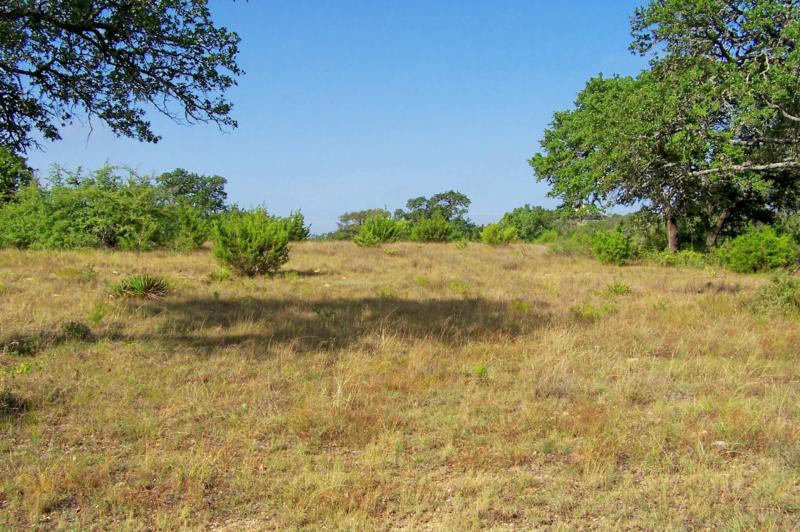
 Based on my experience, these are the factors that affect land note pricing and market value: the land itself, the improvements to the land, and the number of buyers. Obviously, the value of various pieces of land is going to vary a lot. A half-acre empty lot in a booming residential community in Bethesda, Maryland is probably going to have a much different value than say, 200 acres of rural land in Wyoming. Or, even if they happen to have similar value dollar wise (it’s possible), the factors that determine those values are still very, very different.
While the term “vacant land” implies there’s nothing there at all other than tumbleweeds rolling across it, there are “improvements” to the property – such as existing utilities or roadways – that can greatly increase the value of the land. I’ll go over the three categories of land types, their characteristics, and the improvements they typically include later in this lesson. Also, the number of larger corporate institutional buyers that will buy land notes is limited compared to the buyer pool available for purchasing residential notes. In addition, the buyers who are active in acquiring notes secured by vacant land have their own preferences regarding the types of land notes they will or will not purchase. Less interested buyers in the market can mean lower values overall.
Pricing a Land Note
First, land note buyers typically hold their Investment to Value between 50% to 75% maximum of the property value, depending on several factors. Let’s use this ITV rule of thumb in an example. If the land property securing the note is worth $25,000, note buyers will generally pay somewhere between $12,500 to $18,750, depending on the other factors of the deal, including the land type, equity, and terms of the note itself. The quicker the note pays off and the higher the rate of return, the better for the buyer. For example, a 9% note payable over 25 years will sell for less than a 12% note payable over 10 years.
The second key factor is the note’s seasoning. Although some land notes are occasionally purchased with less than six months seasoning, 12 months is generally the minimum preferred. For land note purchases involving all of the remaining payments, notes with less than 12 months seasoning will generally require some compelling offsetting factors. A very large down payment, a note term shorter than 10 years, and proof of rising property values in the area are all factors that could act to balance out the risk of having to recover the invested capital (i.e., foreclosure).
Required yield rates for land notes vary widely depending on the property type and the buyer. The variables involved make it too complicated for a simple land note pricing matrix. Yield spreads in the current market can range anywhere from 10% to over 40% – again, depending on the category and the other risk factors associated with a given note.
I mentioned earlier that one of the major determining factors for land note values are the details about the property itself. Vacant land falls into three broad categories in terms of the land “type” and physical characteristics. These categories will determine the general risk factors that will come into play, which subsequently affects the pricing structures in each category.
Category 1 Land Notes (Build able Lots)
Build able residential lots – also referred to as “fully improved” – are located in subdivisions in prime residential areas. These Category 1 land notes tend to bring the best pricing. Prime residential areas are generally considered to be those areas where local stability, demographics, and economic factors combine to protect the value and desirability of the land securing the notes. These build able lots will be 5 acres or less, and have legally platted lot descriptions recorded with the legal description. They will have full utilities to the lot line, which typically include electricity, telephone, cable TV and Internet, water, and sewer services. Build able lots have paved publicly maintained roads to the lot line, or permanent easement entry line (easement basically means “right of way,” or a privilege to use or access a certain land plot. These can be subdivision lots, urban commercial lots, and in some instances, second home properties in popular resort areas.
Sold individually, Category 1 land notes generally have down payment requirements ranging from 10% to 20%, and required yields ranging from 12% to 18%, with terms of 20 years or less (10 years or less, fully amortized are preferred). If balloon payments are included in these notes, buyers for Category 1 lots generally prefer the balloon payment to be no more than 70% of the original note balance.
Category 2 Land Notes (Improved Lots)
Improved lots are similar to Category 1 properties, except they are located in more rural areas, or in outlying resort areas as second home properties. Buyers for these notes tend to require 20% to 30% payor equity. Yield rates typically range from 14% to 30% depending on the project, the buyer demographics, number of lots sold at the time, number of lots already built on, etc.
Category 2 improved lots are typically15 acres or less, and are improved with at least three of the following improvements structure(s), water/well, paved road access, electrical power, septic/ sewer, telephone, platting, and recorded plat map. Some working farms of larger than 15 acres generally fall into category 2 as well, and the producing crops will be considered as one of the “improvements” by some buyers. Keep in mind that the true market value of smaller farmland may be in it its ability to be developed into residential properties.
Balloon payments can also be acceptable for some buyers, at the 70% note balance “rule” described previously in Category 1 above.
Two important additional factors that affect land value that you should be aware of are promotion and inflated value.
When you’re working with a land note secured by “vacation” type of location (summer homes, ski lodges, etc.), it’s important to consider the prices at which the properties were sold.
A high percentage of out-of-state or non-local ownership in that particular resort development will affect pricing, because these occupants typically paid more than the comparable market value of similar build able land in the surrounding area sold primarily to local buyers.
I have seen one to five acre vacation lots selling for say, $20,000; with $2,000 down and 8% for 20 years – but right next door to the project, you can buy a build able five-acre piece for $8,000 with $2,000 down and 8% over 10 years.
The heavy, high-dollar promotional effort in these types of land sales are usually focused on selling primarily out-of-state buyers a lot of “blue sky,” and artificially inflating land prices in that development. “Blue sky” is a term that describes value is subjective and not supported by real world numbers. So, the “blue sky” value of Category 2 lots will be discounted out of the note.
Category 3 Land Notes (Unimproved Lots or Land)
Raw land, acreage, and recreational land parcels are all at the lower end of the land note pricing and ITV totem pole. Lots that are similar to those described above in Categories 1 & 2 but do not meet the guidelines for improvements will be classified as “unimproved land.” Some examples would be unpaved roads, well water instead of city water, and limited or no phone service. Often, Category 3 property will refer to parcels greater than 15 acres, which generally are not crop producing working farms. Unimproved lots often include pastureland, desert land, mountain land and various other types of vacant land properties. With these types of land notes, buyers like to see 30% to 50% down payments, and terms 20 years or less, fully amortized. Any balloon payments generally may not exceed 55% of note value. Yield requirements range from 20% to 40%.
Commercial-Industrial Land/Development Ground
The pricing on these types of properties will generally be dependent on recent history of the property, based on its viability for the intended property use. Both types of lots encompass a broad variety of location, zoning, and usage factors that are often hard to quantify. Also, the status of property in terms of what stage of development it is in can make a big difference. As a result, notes secured by industrial land plots or vacant land in commercial areas can bring a yield as low as under 10%, or be heavily discounted in order to sell. For example, a piece of ground on the edge of town, located in a residential growth corridor, having a designated pre-zoning classification in the city’s Master Plan, is generally going to hold a high development value.
At the same time, even this chunk of land is not quite so secure or valuable as it would be if the “tentative” map on it were already approved by the applicable regulatory agencies. That commercial land would be even more valuable if the final map has already been completed and approved by appropriate governmental agencies.
Generally, a property zoned C-1 (light retail commercial) is worth more than a property zoned M-1 (light industrial). Of course, specific location and economic factors can make a huge difference. Zoning classifications vary in different areas. Your town or county may use slightly different classification codes.
For these reasons, for this kind of land package, it is generally recommended that an appraisal is submitted with the request for quote from buyers. Or, if your seller at least has one on file, you may include relevant and material “appraiser comments” in your submission for quote. Also, for all commercial/industrial land notes, information about zoning, current usage, demographics, economics, and appraiser comments should be included with your summary to buyers (not a bad idea for all income property notes too, actually). Note buyers can’t make a meaningful quote without sufficient information about the property.
Seconds on Land
Junior position land paper is almost never marketable in the private note sector, except in the most rare of circumstances, and the pool of buyers for even those rare circumstances is limited almost exclusively to small, “risk tolerant” local buyers. The yield requirements in such cases will likely be along the lines of 30% to 40% or even higher.
The Combined Investment to Value (CITV, or the junior loan balance combined with senior loan balance) for seconds secured by land, will usually be the same as ITV. In other words, the CITV still won’t be allowed to exceed the ITV requirements (50% to 75%) that apply to a senior position note.
Also, a second position note generally must not exceed a 2 to 1 ratio in relation to an underlying senior note. For example, if the second is a note with a $15,000 balance, the senior loan balance must be $30,000 or less.
Final Thought
Much like loan programs offered in traditional lending markets, note buyers looking for particular categories of notes come and go. The big institutional buyers with deep pockets sometimes surprise me with what they’ll buy, and at what price!
© FRANJOMAS, Inc.